Rethinking how mechanical power moves
HOGENAR IGT (Infinity Gear Transmission) is a mechanical transmission architecture designed to transfer torque through controlled rolling contact — reducing sliding friction at the primary power-transfer interface.
Continuous variation. Controlled rolling contact. One mechanical platform
Power transmission sits at the heart of transportation, energy, industrial machinery, robotics and countless drive systems. Conventional solutions perform remarkably well, but sliding contact, auxiliary systems and multi-component architectures can introduce energy losses, wear and maintenance demands.
IGT approaches the problem from a different direction. Its geometry is designed to combine continuous ratio variation with a controlled rolling-contact power path — creating new possibilities for efficient torque transfer and integrated drivetrain functions.
A different approach to variable transmission
IGT is a mechanical transmission platform based on a proprietary geometric and kinematic principle. It is designed to adjust the transmission ratio continuously while maintaining torque transfer.
Unlike architectures that depend on a friction-driven traction interface, IGT is designed around controlled rolling contact between precision kinematic elements. This is intended to reduce sliding losses at the main power-transfer interface and support a more integrated drivetrain architecture.
Designed for value across the system lifecycle
Efficiency potential
Reducing sliding at the primary torque-transfer interface can limit frictional losses and heat generation, subject to configuration and operating conditions.
Durability potential
A rolling-contact architecture is intended to reduce wear at the main power-transfer interface and support longer service intervals.
Simpler drivetrain integration
Where several transmission functions can be combined in one application-specific configuration, IGT may reduce the number of separate mechanisms and interfaces.
Lower lifecycle demands
Measured efficiency, fewer wear-intensive interfaces and reduced component count can contribute to lower maintenance, downtime and total cost of ownership.
One platform. Multiple sectors
Any rotating system that must transfer torque, change ratio or control motion may present an opportunity for IGT. The most promising applications will be selected through joint engineering and validation.
Mobility and transport
Electric, hybrid and combustion vehicles; commercial vehicles; rail systems; marine propulsion; motorcycles; micromobility.
Energy systems
Wind and hydro power; tidal generation; solar tracking; generators and other rotating energy equipment.
Aerospace and defense
Aircraft and rotor systems; drones; satellite positioning; precision aerospace mechanisms; military and marine platforms.
Robotics and precision motion
Industrial and surgical robotics; collaborative robots; exoskeletons; laboratory equipment; telescope positioning; semiconductor manufacturing.
Industrial machinery
Mining and construction equipment; CNC machinery; presses; conveyors; compressors; pumps; material-handling and oil & gas applications.
A dedicated Applications section with case-specific detail is in development.
Discuss your applicationBuilt for application-specific partnerships
IGT is a technology platform rather than a single off-the-shelf product. HOGENAR works with organizations that bring sector expertise, engineering capability, manufacturing resources and routes to market.
The collaboration model is built around long-term development and licensing partnerships — from application assessment and confidential technical review to prototyping, validation and commercialization.
Could IGT change what is possible in your system?
Tell us about the application, operating conditions and transmission challenge. We will assess whether IGT is a relevant architecture for further technical discussion.
A new architecture for continuously variable power transmission
Infinity Gear Transmission (IGT) uses a proprietary geometric and kinematic principle to continuously vary the transmission ratio while transferring torque through controlled rolling contact.
Axonometric line study of an abstract infinity-form band — not the patented geometry
Why transmission architecture matters
Mechanical power-transmission systems balance torque capacity, ratio range, efficiency, durability, control and package size. Conventional architectures solve these requirements through proven combinations of gears, clutches, friction-driven variable transmissions, hydraulics and electronic control.
Those solutions are highly effective in the applications for which they are designed. They can also require trade-offs: sliding losses, lubrication systems, multiple discrete mechanisms or additional control hardware. IGT is being developed to offer a different balance of those requirements.
Controlled rolling contact at the power-transfer interface
IGT transfers torque through geometric interaction between precision kinematic elements. The contact geometry is designed to maintain a controlled rolling relationship as the transmission ratio changes.
This architecture is intended to reduce sliding in the primary power path while enabling smooth, continuous ratio variation. Detailed geometry, load paths and control methods remain confidential and are shared with qualified partners under appropriate agreements.
Engineering characteristics of the platform
Continuous ratio variation
The transmission ratio is designed to change smoothly, without the discrete steps of a fixed-ratio gear set.
Torque transfer during ratio change
The architecture is designed to maintain the mechanical power path as the ratio changes, enabling uninterrupted torque transfer.
Reduced sliding in the primary power path
Controlled rolling contact is intended to limit the sliding losses and heat associated with friction-driven traction interfaces.
Application-specific integration
In selected configurations, IGT may integrate functions that otherwise require separate mechanisms, including direction control, braking behavior, differential action or precision positioning.
Dry-running options
Some configurations are intended to operate without a conventional oil-lubricated traction interface. Lubrication requirements for bearings and auxiliary components remain design-specific.
Scalable configuration
The platform is intended to be adapted to different torque, speed, packaging and environmental requirements through application-specific engineering.
Not a conventional gear set. Not a friction CVT. Not a hydraulic drive
A fixed-ratio gear train uses meshing teeth and usually changes ratio through discrete gear stages. A friction-driven CVT varies ratio continuously through a traction interface. A hydraulic drive transfers and controls power through pressurized fluid. IGT is a distinct mechanical architecture designed to combine continuous ratio variation with a controlled rolling-contact power path.
Drag the gold handle on the input shaft to turn the mechanism
Illustrative only. This module compares typical architecture-level characteristics, not measured performance figures for any specific product. Actual efficiency, torque capacity, durability and control behavior depend on the specific design, materials and application and should be confirmed through application-level testing.
From invention to application validation
HOGENAR has developed IGT through engineering design, prototyping and testing. The current program is focused on application-specific prototypes, industrial validation and partnerships that can take the technology into defined markets.
Current reported technology readiness: TRL 6 — representative prototypes and key operating principles demonstrated in conditions relevant to intended applications.
Protected development. Selective technical disclosure
The IGT invention has been filed as an international patent application through the Patent Cooperation Treaty (PCT), administered by the World Intellectual Property Organization (WIPO).
- PCT application number
- PCT/NO2026/050004
- Filing date
- 10 January 2026
Public materials explain the architecture, intended capabilities and application potential; detailed construction information is disclosed selectively to qualified partners under confidentiality arrangements.
Frequently asked questions
Does IGT eliminate friction?
No mechanical system is completely frictionless. IGT is designed to reduce sliding at the primary torque-transfer interface by using controlled rolling contact. Bearings, seals and other supporting components may still produce frictional losses.
How is IGT different from a conventional CVT?
Both are intended to provide continuous ratio variation, but their torque-transfer principles differ. Conventional friction-driven CVTs rely on traction between contacting surfaces. IGT is designed around geometric rolling interaction between precision elements. Application-level testing is required to compare torque capacity, efficiency, durability and control behavior.
How does IGT compare with Varionova’s RatioZero (“Zero Rotation”) concept?
Both pursue continuous ratio variation. As publicly described, RatioZero passes torque between planets through one-way clutches, which in our assessment limits it to drives that need no braking, reversing or back-driving. IGT is designed to vary speed and transmit torque through continuous rolling contact, without using clutches of any kind.
How does IGT compare with an eCVT?
An eCVT sets the ratio through an electric machine on a planetary gearset, so it needs a second, independently controlled power source beside the engine (typically motor-generators, a battery and an inverter). That adds conversion losses, cost and dependence on electronics. IGT is purely mechanical and needs no second power source.
Can IGT operate without lubrication?
Selected IGT configurations are designed for a dry primary torque-transfer interface. Lubrication requirements for bearings, seals and auxiliary components depend on the final system design and operating environment.
Can one IGT configuration replace a clutch, brake or differential?
Certain configurations may integrate functions such as engagement behavior, braking, direction control or differential action. The available functions and performance limits must be defined and validated for each application.
Is IGT available as an off-the-shelf product?
IGT is currently positioned as a technology platform for application-specific development and licensing rather than a single catalogue product.
Why are detailed drawings not published?
The operating geometry contains proprietary and potentially reproducible know-how. Qualified partners can receive additional technical information at the appropriate stage of discussion and under suitable confidentiality agreements.
What is the collaboration process?
The process normally begins with an application discussion and high-level technical assessment. If there is a credible fit, the next stages may include a confidentiality agreement, detailed engineering review, feasibility work, prototyping, validation and licensing negotiations.
What comes next for the technology?
Development priorities include application-specific prototypes, industrial validation, manufacturing readiness and expansion of intellectual-property protection in selected markets.
Bring us the transmission challenge
Share the required torque, speed range, duty cycle, environment and packaging constraints. We will evaluate whether IGT merits a deeper technical discussion.
Engineering experience.
Scientific insight. Practical execution
HOGENAR brings together mechanical engineering, transmission research, manufacturing knowledge and hands-on prototyping experience to develop IGT from concept to industrial application.
Setting the technical and commercial direction

Marek Fenczak
Founder and Inventor · MSc, Civil EngineeringMarek is the founder of HOGENAR and inventor of the IGT architecture. His background spans engineering design, structural analysis and mechanical development.
He has led IGT from its initial concept through engineering design, prototyping and testing, and directs the company's technology strategy and commercialization program.

Anita Korda
Project Advisor · MSc, Mechanical EngineeringAnita is a mechanical engineer with experience in manufacturing engineering, industrial processes and project coordination.
She provides engineering supervision on the project and supports HOGENAR's organizational development, partner coordination and commercialization activities by connecting technical requirements with project execution.
Jan Zwolak
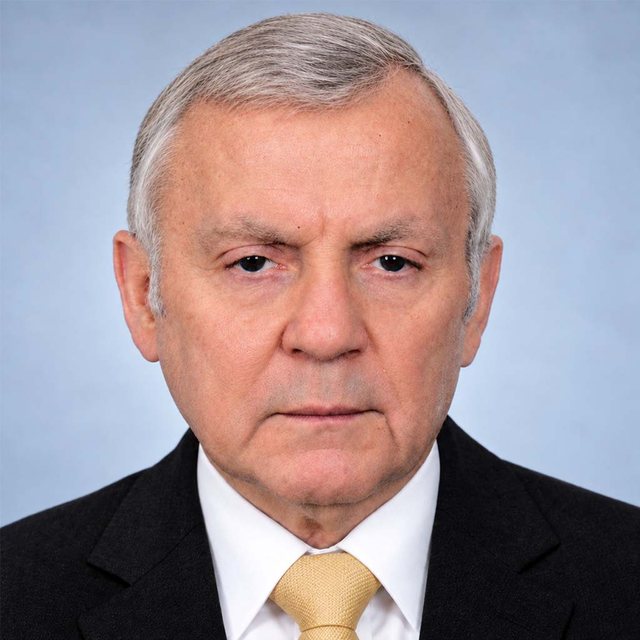
Scientific Advisor · Professor, Mechanical EngineeringJan is a specialist in the design and construction of gear units, where parameters for contact and volumetric fatigue strength — determined experimentally for a specific material and manufacturing technology — are applied.
His scientific expertise provides valuable insight into mechanical transmission systems and supports HOGENAR's long-term research, engineering development and technology validation strategy.
Kamil Wójcik
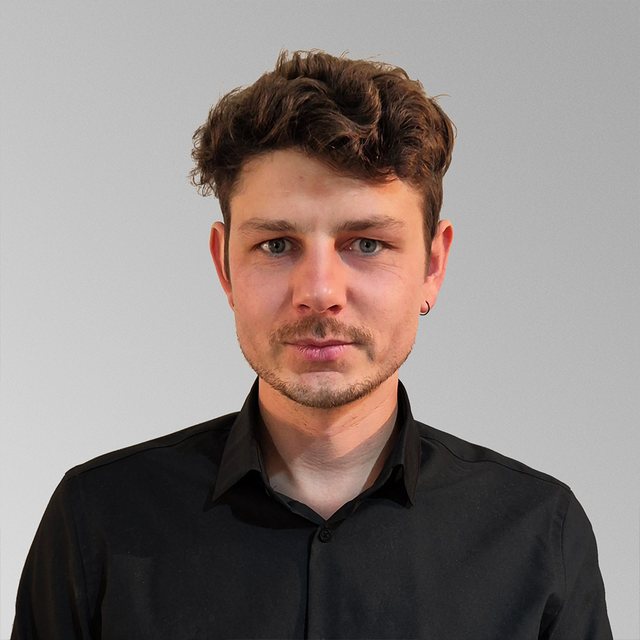
Visual Design & Technology Communication · MSc, ArchitectureKamil is an architect specializing in 3D visualization, digital design and technical animation. He developed the IGT technology presentation animation and leads HOGENAR's visual communication, including future technical visualizations, presentations and digital content.
His work supports the company's visual identity and communication with industrial partners and investors.
Manufacturing and assembling the hardware

Łukasz Zabłotni
Mechanical TechnicianŁukasz brings more than 20 years of practical experience in mechanical maintenance, repair and machine operation. His workshop knowledge supports the manufacturing and assembly of prototype hardware, and hands-on workshop problem solving.

Mateusz Rakoczy
Mechanic and Machine OperatorMateusz has more than 20 years of experience in mechanical repair, equipment operation and workshop practice. He contributes to the manufacturing, assembly and adjustment of HOGENAR's mechanical systems.
Work with the team developing a new transmission architecture
We welcome conversations with engineering, research, manufacturing and commercialization partners.
Let's explore the right application
If your system needs continuous ratio variation, demanding torque transfer or a more integrated drivetrain architecture, tell us about the challenge. We will begin with a high-level discussion to assess technical and commercial fit.
General enquiries are handled through the form. Where there is a credible opportunity, further information can be shared under appropriate confidentiality arrangements.
- We review the application and identify the relevant HOGENAR contact.
- We arrange an introductory discussion if the opportunity appears relevant.
- If both parties wish to proceed, we define confidentiality and the scope of technical evaluation.
Tell us about your transmission challenge
How HOGENAR AS handles personal data
This page explains what personal data we collect through this website, why, who may receive it and what rights you have. Last updated 14 October 2026.
Who is responsible
HOGENAR AS (organisation number 931 825 070), Frydenbergveien 46B, 0575 Oslo, Norway, is responsible for the personal data described on this page. For questions or requests about your data, use the contact page or call +47 403 45 283.
The contact form
When you send an enquiry through the contact form, we receive what you type into it: your name, company and role, work email address, telephone number (if you give one), sector or intended application, topic, message, any technical requirements and preferred meeting timeframe you add, and your tick in the acknowledgement box.
We use this information to answer your enquiry and, where relevant, to assess and prepare a possible cooperation with you or your company. We do not use it for marketing mailings and we do not sell it.
The form sends your enquiry as an email to a HOGENAR mailbox. To limit spam, the form also keeps a small technical record (a scrambled, non-reversible version of your IP address and the time of your submissions) that is used only to limit repeated submissions.
Legal basis
We process enquiry data because we have a legitimate interest in responding to business enquiries and building business relationships (GDPR Article 6(1)(f)), and, where you ask us to take steps before entering into an agreement, to perform those steps (Article 6(1)(b)).
Visiting the website
This website sets no cookies of its own, uses no analytics, advertising or tracking tools, and stores nothing in your browser. Our web hosting provider’s servers do receive, and may log, standard technical information when you visit, such as your IP address, the time and the page requested; this is needed to deliver the site and keep it secure.
Two outside services are loaded by the pages:
- YouTube. The Home page shows a video player from YouTube, operated by Google, using YouTube’s privacy-enhanced address (youtube-nocookie.com). Your browser connects to YouTube when the Home page opens, so Google receives technical data such as your IP address, and it may store or read information on your device when you use the player. See Google’s privacy policy.
- Google Fonts. The typefaces used on the site are loaded from Google’s servers, so your IP address is also sent to Google when a page loads.
The LinkedIn, YouTube and X icons in the footer are ordinary links. Those services receive data about you only if you click them, and then handle it under their own policies.
Who receives your data
Our web hosting and email provider (Domene) handles the website files, server logs and the mailbox that receives enquiries, on our behalf. Google receives the technical data described above. We do not sell personal data, and we do not share enquiry details with anyone outside HOGENAR except service providers that help us run the website and email, or where the law requires it.
Google may process data in countries outside the European Economic Area, including the United States, under the safeguards described in its own policies.
How long we keep it
We keep an enquiry for as long as needed to handle it and any resulting discussions or cooperation, and normally delete it no later than 24 months after our last contact, unless the law or an agreement requires us to keep it longer. Server logs are kept by the hosting provider according to its own routines.
Your rights
Under the GDPR you may ask us for access to your personal data, for correction or deletion, to restrict our processing, to object to processing based on our legitimate interest, and to receive the data you gave us in a portable format. To use these rights, contact us as described at the top of this page.
You also have the right to complain to the Norwegian Data Protection Authority (Datatilsynet), datatilsynet.no.
Changes
We may update this page from time to time. The date at the top shows when it was last changed.